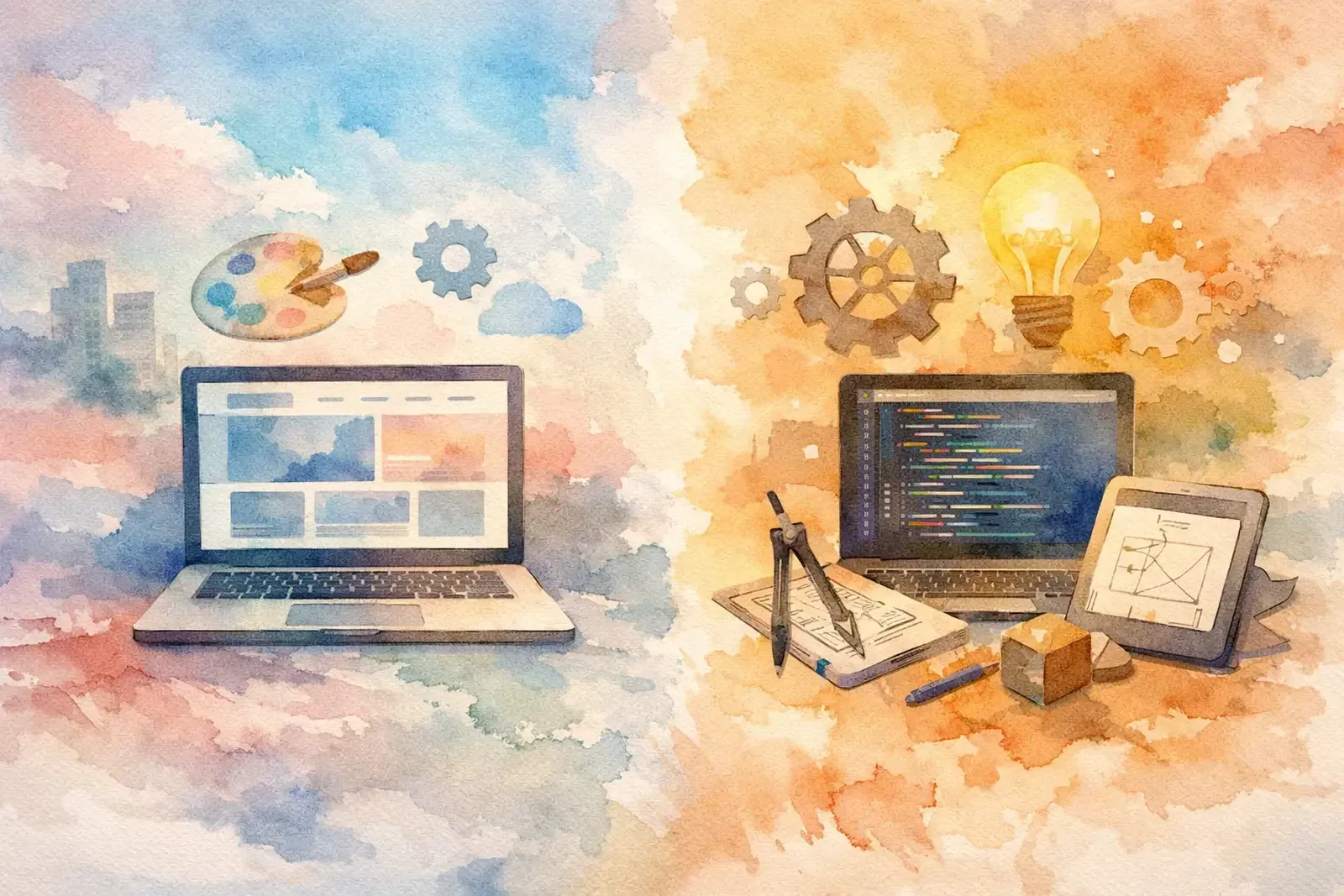
Ready-Made Website or Custom Software? A Decision-Making Guide
Choosing the wrong infrastructure for a web project affects not only the initial investment cost but also sales processes, operational efficiency, and the brand's digital reputation. Therefore, the question of ready-made website or custom software should be considered a strategic decision related to the organization's objectives rather than a design preference. While a ready-made platform may be the right solution for a company that needs to launch quickly, the same system may soon become restrictive for an organization with multi-stage workflows.
Considering only the initial price is not sufficient when making a decision. Content management, integrations, security, maintenance requirements, growth plans, and user experience must be evaluated together. The right option is not the one offering the greatest number of features, but the one that supports your business without creating unnecessary costs and complexity.
Ready-Made Website or Custom Software: What Is the Main Difference?
A ready-made website is a web solution built on a previously developed theme, content management system, or e-commerce platform. Many features, such as page structures, administration panels, basic membership functions, product management, and contact forms, are available from the beginning. The solution is adapted to the brand through design and content work, while limited additional developments can be implemented later when necessary.
Custom software, on the other hand, is a solution developed from scratch or built on a dedicated architecture after analyzing the organization's requirements. User roles, quotation processes, dealer interfaces, approval mechanisms, ERP connections, reporting structures, and business rules are designed according to the company's operating model. The objective is not to force existing operations into a predefined structure, but to adapt the digital system to the business model.
The difference often becomes apparent in business processes rather than visual appearance. Both solutions can feature professional designs. However, while the limitations of one are determined by the selected platform, the boundaries of the other are planned according to project requirements.
When Does a Ready-Made Website Make Sense?
Ready-made platforms are often sufficient for corporate presentation websites, service pages, references, news, blog content, and basic communication requirements. Particularly when a new brand needs to establish digital visibility quickly, a well-configured content management system offers advantages in terms of cost and time.
Standard e-commerce processes can also be managed through ready-made systems. Developing basic features such as catalog structures, product detail pages, shopping carts, payments, shipping, and campaign modules from scratch is not always a rational choice. The critical consideration is whether the business genuinely operates according to a standard sales model.
Another important advantage of choosing a ready-made website is that content teams can work independently. Creating new pages, publishing announcements, changing images, or adding blog content does not require a software development process every time. This makes it easier for marketing departments to keep content up to date.
However, selecting a ready-made system should not simply mean installing a theme. Corporate design must be adapted to the brand, mobile usability must be tested, page speed must be improved, security updates must be managed, and the SEO infrastructure must be properly established. A project that launches quickly without a maintenance plan may accumulate technical debt over time.
When Does Custom Software Become Necessary?
Custom software becomes a stronger option when an organization's digital platform is directly integrated into its business processes. For example, standard modules may be insufficient in environments where dealers place orders at different prices, customers upload documents, applications undergo multi-stage approvals, or field teams exchange data with a central system.
The value of custom software is not limited to its ability to add requested features. It also makes processes measurable, traceable, and subject to access controls. A public institution's application platform may require separate interfaces for citizens, specialists, and administrators. In an industrial company, product configuration, dealer permissions, quotation approvals, and inventory data may need to be combined within a single system.
Integration requirements are also decisive in these projects. If secure data exchange with ERP, CRM, accounting, shipping, payment, call center systems, or internal databases is required, the software architecture should be designed around these needs from the beginning. Uncontrolled additions made later may lead to performance and security problems.
Custom development requires a longer analysis and testing period. However, when properly planned, it reduces manual tasks performed by teams and lowers operational costs. Therefore, return on investment should be evaluated not only by the number of website visitors but also by the time saved in business processes and reductions in error rates.
Evaluate Your Budget Based on Total Cost of Ownership Rather Than Initial Cost
Ready-made systems initially appear more economical. Development time is shorter because the infrastructure and basic functions already exist. However, licenses, paid plugins, theme dependencies, customization requirements, version updates, and maintenance services may change the total cost over time.
Custom software requires a higher initial investment. Analysis, user experience design, software development, testing, server configuration, and documentation processes are included in the budget. In contrast, unnecessary licensing or plugin costs can be reduced because only the required functions are developed.
For a meaningful comparison, the project budget should be evaluated from a perspective of at least three years. First-year costs, annual maintenance, development requests, business losses caused by system downtime, security risks, and the manual labor required from teams should all be considered. A low initial cost does not always mean a low total cost.
Scalability and Performance Should Be Central to the Decision
An e-commerce website operating with a few hundred products today may need to support tens of thousands of products, multiple languages, different currencies, and dealer-specific pricing tomorrow. Similarly, a corporate website initially designed solely for promotional purposes may eventually evolve into a customer portal or application system. Platform selection should take this possibility into account.
Ready-made platforms can deliver successful results up to a certain level of growth. High performance can be achieved through appropriate server infrastructure, optimized images, a clean plugin structure, and technical maintenance. However, adding a new plugin for every requirement may negatively affect system speed and manageability.
With custom software, performance requirements can be defined at the beginning of the project. The architecture can be designed accordingly to support high traffic volumes, large datasets, different user permissions, or complex queries. Nevertheless, custom software is not automatically fast or high-quality. Coding standards, testing processes, server resources, and ongoing technical support determine the outcome.
Security and Maintenance Are Not Solely the Responsibility of Technical Teams
When selecting web infrastructure, security should not be postponed until the end of the project. Particularly in systems processing personal data, commercial information, customer records, or payment data, access permissions, data backups, updates, and access logs must be clearly planned.
The most common risks in ready-made systems are outdated core versions and uncontrolled plugin usage. Components selected from reliable sources, regular updates, and backup policies help reduce these risks. With custom software, security responsibilities are directly related to the development approach. Without code reviews, access testing, and secure development standards, a custom system may also present risks.
Organizations should ask the following question: Who will be responsible for the system after it goes live? If technical support, incident response, server management, updates, backups, and the handling of new requirements are not clearly defined, the project should not be considered complete.
The Right Questions for Aligning Your Decision with Business Objectives
To clarify the selection process, first define the role of the platform. If the website is intended only to establish corporate trust and generate potential customer inquiries, a customized ready-made platform may often be sufficient. If the platform generates revenue, manages users, exchanges data with different systems, or changes employees' daily workflows, the need for custom software becomes stronger.
Also, evaluate your business processes. Is your existing workflow genuinely unique to your organization and a source of competitive advantage, or does it consist of habits that have not yet been digitized? Not every different process requires custom software. In some cases, simplifying operations delivers better results than an expensive development project.
The right approach begins with requirements analysis and ensures that technical decisions remain aligned with marketing objectives. Coordinating web design, software development, SEO, advertising, and analytics around the same goals makes it easier for digital investments to generate measurable results.
The value of a platform is demonstrated not on the day it goes live, but by how much speed, control, and visibility it brings to your organization six months later. Therefore, make your decision based not on whether a solution is ready-made or custom-built, but on your sustainable growth plan.
Photo Gallery