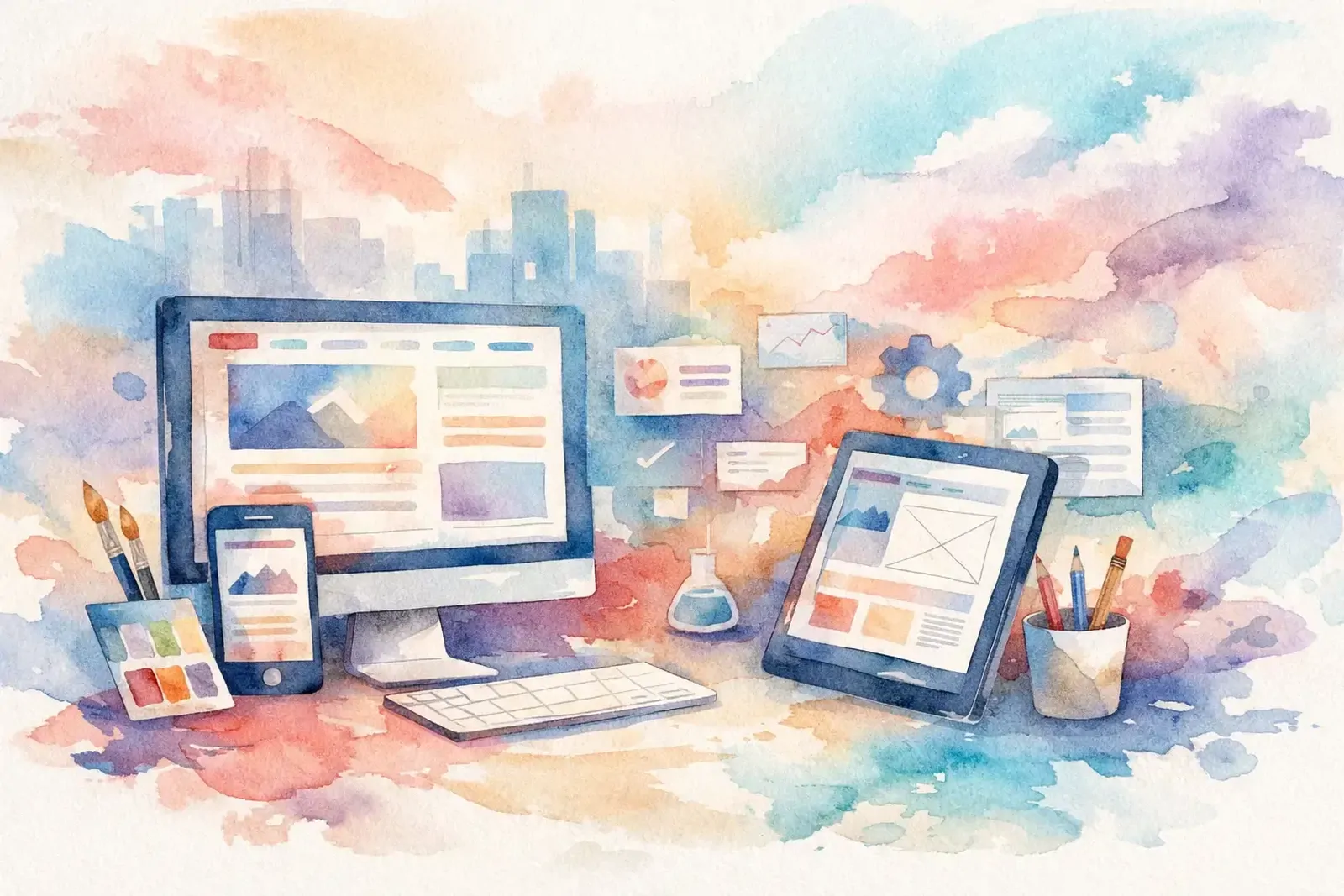
Corporate Web Design Trends and New Expectations
A corporate website is not merely a digital brochure introducing your company. It is the sales team's first point of contact, a signal of trust for investors and business partners, a reflection of corporate culture for job candidates, and the measurable center of marketing activities. Therefore, corporate web design trends should be evaluated not simply as visual preferences, but as strategic developments affecting an organization's reputation, accessibility, operational efficiency, and conversion potential.
When making a new design decision, the main question should not be “Does the website look modern?” A better question is: “Does this structure help our target audience access the information they need quickly and build trust in our organization?” Successful corporate web design brings brand identity, technical infrastructure, content management, security, SEO, and user experience together within a unified plan.
Why Are Corporate Web Design Trends Changing?
Users' expectations of websites, mobile browsing habits, and search engines' quality criteria are constantly evolving. In addition, organizations now expect more business results from their websites: generating qualified leads, providing information to dealers and solution partners, supporting human resources processes, organizing document sharing, and measuring the performance of digital campaigns are among the main priorities.
This transformation means that corporate websites can no longer be treated as one-time projects. After the design phase, content must be updated, user behavior monitored, technical vulnerabilities addressed, and page performance improved. This is where the lasting impact of trends becomes clear: making an organization's digital infrastructure more manageable and efficient.
Speed Is an Essential Part of Design Quality
Strong visuals, animated elements, and high-resolution videos can support brand perception. However, if they slow down page loading, the commercial impact of the design may become negative. Particularly on mobile connections, long waiting times can cause users to leave before reaching contact forms or product pages.
For this reason, performance-focused design is becoming increasingly important. Using images in appropriate formats and sizes, reducing unnecessary code, configuring caching infrastructure correctly, and loading page components according to priority are fundamental practices. Website speed is not solely the responsibility of the technical team. Designers, content teams, and developers should work toward the same objective.
Using the same level of animation or video in every project is not appropriate. For example, an architecture firm, tourism business, or premium consumer brand may benefit more from visual storytelling. In contrast, an industrial manufacturer may place greater priority on quick access to technical product specifications, certifications, and quotation request processes.
Accessibility Makes Corporate Quality Visible
Accessibility is no longer an additional feature intended only for specific user groups. It is a quality standard that enables everyone to access content more comfortably. Sufficient color contrast, readable font sizes, keyboard navigation, descriptive text for images, and understandable form fields are essential elements of accessible design.
This approach is particularly important for public institutions, educational organizations, financial services, healthcare providers, and large enterprises. Visitors of different ages, using different devices and possessing different levels of digital ability, should be able to access corporate information without barriers. Accessibility improvements also frequently enhance content hierarchy and overall user experience.
Accessibility should not be treated as a minor check performed at the final stage of design. It should be planned while creating the color system, navigation structure, buttons, forms, and content templates. Changes made afterward can be more expensive and may weaken the overall consistency of the result.
Clearer Information Architecture and Simpler Interfaces
One of the most common problems on corporate websites is that every department wants to place its own message on the homepage. As a result, visitors may struggle to understand which services are offered, which industries the organization specializes in, or how to get in touch. The current approach is to shorten decision-making time by using fewer but more meaningful components.
Simple design does not mean an empty page. It means presenting information through a carefully planned hierarchy. The organization's value proposition should be clear on the homepage, while services, industry experience, reference projects, areas of expertise, and contact options should appear in a logical sequence. Longer texts can be used when necessary, but headings and transitions should make the page easier for visitors to scan.
Mega menus are also being reconsidered in this context. A comprehensive navigation structure can be useful for organizations offering numerous services. However, for a company providing only a few core services, unnecessarily complicated navigation may create confusion rather than a professional impression.
AI-Powered Experiences Should Be Used Responsibly
Artificial intelligence can create value on corporate websites through personalized content recommendations, intelligent internal search, classification of initial inquiries, and multilingual content workflows. These applications can save time, particularly for organizations with extensive product catalogs, technical documentation, or multiple target markets.
However, the use of artificial intelligence should always be justified by actual user benefits. Chat tools that cannot connect users to a real support team, provide inaccurate information, or communicate outside the organization's established tone can damage trust. Similarly, automatically generated content published without expert review may create risks related to brand accuracy and legal compliance.
The right approach is to position artificial intelligence as a supporting layer for business processes rather than a replacement for human expertise. Corporate knowledge, data security, approval mechanisms, and record-keeping procedures should be defined at the beginning of the project.
Security and Data Transparency Are Part of Design
Visitors share personal and corporate information when completing forms, uploading resumes, or submitting quotation requests. This experience must inspire trust. Clear consent statements, accessible privacy and cookie preference options, forms that do not request unnecessary information, and secure connection infrastructure are fundamental expectations.
Security is not limited to invisible server configurations. Transparent interfaces that explain what information is requested and why directly support corporate trust. Particularly for public institutions and B2B companies, up-to-date software versions, regular backups, access control structures, and attack prevention measures are important elements of uninterrupted service.
Conversion-Focused Content and Measurable Design
Corporate visitors often do not make immediate purchases. They compare services, evaluate technical capabilities, look for references, and conduct internal assessments before making decisions. Therefore, conversions are not achieved simply through a “Buy Now” button. Well-prepared service pages, case studies, expert content, certifications, frequently asked technical questions, and clear calls to action support the decision-making process.
Design decisions should be monitored through analytics data. Which pages generate inquiries, where visitors leave the website, and how mobile and desktop behavior differs should be evaluated regularly. The objective is not to increase the number of form submissions, but to generate qualified inquiries from the right visitors.
At this point, planning web design, SEO, and digital advertising together becomes increasingly important. If the page reached by an advertising visitor is not consistent with the advertising message, campaign efficiency decreases. Content created to gain visibility in organic search should also be supported by a persuasive, technically fast, and easy-to-understand page experience.
Determining the Right Priorities for Your Organization
Not every trend is equally necessary for every organization. Priorities should be determined according to your target audience, existing digital infrastructure, content volume, sales processes, and legal requirements. For example, a multilingual structure and localized content management may be critical for a company expanding into international markets, while a local service provider may benefit more from a fast contact process and regional search visibility.
An effective project begins with a technical and content analysis of the existing website. A sustainable structure is then developed by considering user journeys, brand objectives, search visibility, and management requirements. Invilon's approach to corporate projects is also based on evaluating design together with software development, content, performance, and ongoing support processes rather than treating it as a separate activity.
Your website is one of your organization's longest-lasting digital assets. Therefore, before implementing a new trend, the best starting point is to evaluate whether it genuinely makes visitors' tasks easier and contributes measurably to your organization's objectives.
Photo Gallery